What is an API integration and when do you need one?
An API integration connects two systems so that data or actions can move between them without someone manually copying information from one place to another.
What does API actually mean?
An API is a defined way for one software system to request data or trigger an action in another. Instead of opening the second system as a human user, the first system communicates with it programmatically.
The API defines which requests are allowed, what data must be sent, what comes back and how authentication works.
What does an API integration look like in practice?
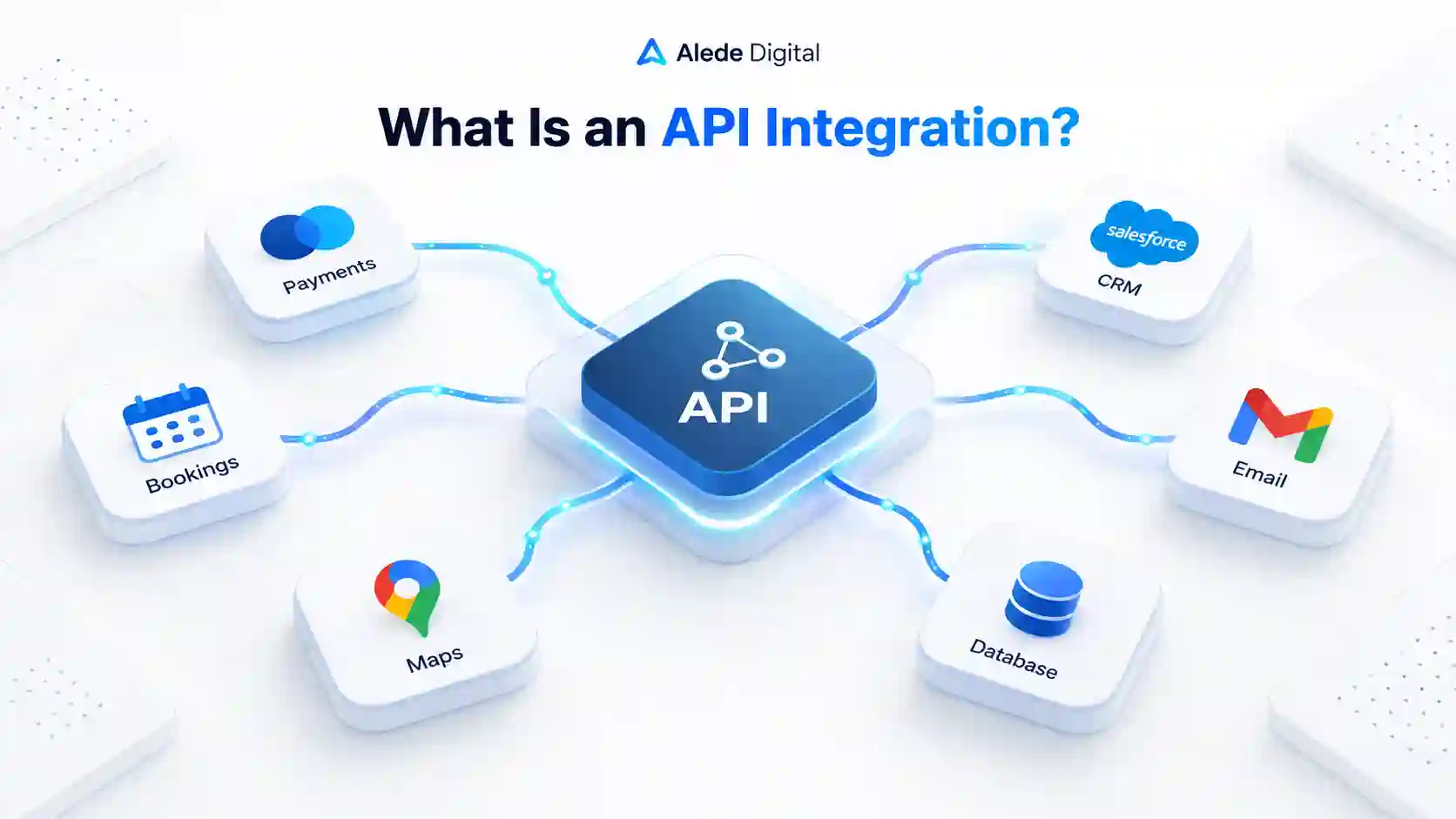
A customer submits a booking on your website. The application can send that booking to a calendar, create or update a contact in the CRM, trigger an email confirmation and save the result in its own database.
To the customer this may look like one click. Behind the scenes several systems may have exchanged data and confirmed that every step succeeded.
When does an API integration genuinely make sense?
- The same data is manually entered in two or more systems
- Customers need real-time availability, pricing or status data
- Payments, CRM, email or analytics must be connected to the workflow
- An internal system needs to publish or receive data automatically
- Manual transfer creates errors or consumes significant staff time
An integration is not just “fetch the data”
Production integrations need to handle more than the happy path. What happens if the external service is temporarily unavailable? What if data is incomplete, a request is sent twice or a rate limit is reached?
Good integration work includes validation, retries where appropriate, logging, error states and a clear strategy for keeping systems consistent.
Authentication and security are part of the integration from day one
API keys, OAuth tokens, webhooks and service accounts must be stored and used safely. Sensitive credentials do not belong in public frontend code.
The integration also needs to respect what data is allowed to leave one system and what the receiving service is permitted to do with it.
What determines API integration complexity and cost?
A well-documented modern API may be integrated quickly. An old or inconsistent system with limited documentation can take much longer even if the visible result appears simple.
- Quality and completeness of third-party documentation
- Authentication method
- Amount and structure of data
- Number of endpoints and actions
- Webhooks or real-time synchronisation
- Error handling and retry requirements
- Testing environments and third-party limitations
How do we plan an integration before writing code?
We start by defining the source of truth for every important piece of data. Then we map which system sends what, when it should happen, which identifiers connect records and how errors are handled.
That prevents the integration becoming a collection of isolated requests that are difficult to debug later.
When is an API integration not necessary?
If data changes only occasionally and the manual process is fast, safe and inexpensive, automation may not create enough value to justify development.
Sometimes a CSV import, a built-in connector or an existing automation tool solves the problem perfectly well. Custom code should be used when it genuinely improves reliability, speed or control.
Maintenance does not stop when the integration goes live
External APIs change. Tokens expire, providers release new versions, fields are deprecated and business rules evolve. Monitoring and logs help identify failures before they become a customer problem.
Conclusion
A good API integration removes manual work and makes several tools behave like one coherent system. Its value comes from reliability, not from simply proving that two services can exchange a request.
The best starting point is a clearly defined business flow: what information moves, why it moves, which system owns it and what should happen when something goes wrong.
Need two systems to work together?
Describe the tools you use and what currently has to be done manually. We can assess whether an API integration is the right solution.
Related articles