SEO before launch — what should be prepared in advance?
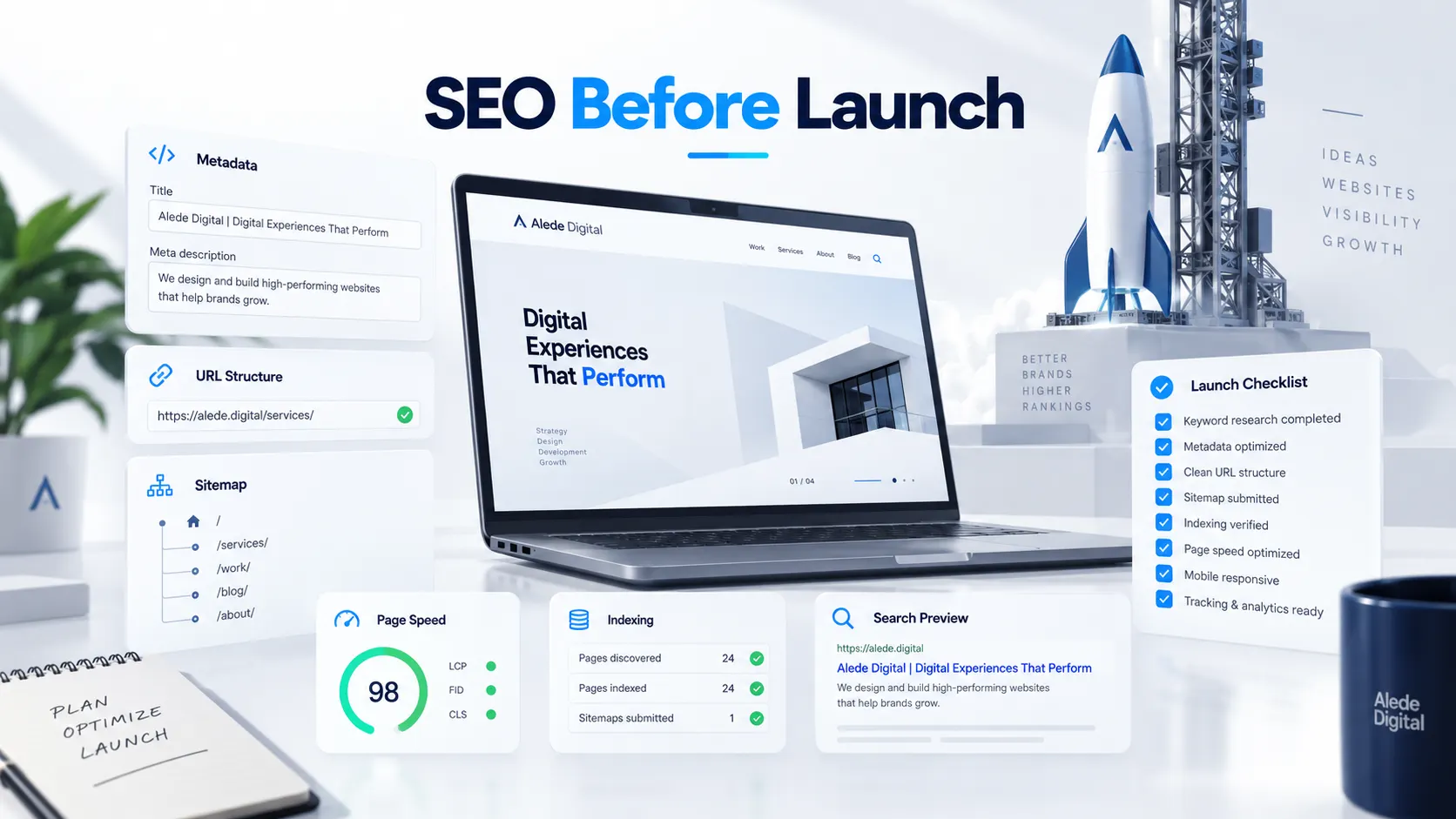
Good SEO does not begin after the website has already launched. URL structure, metadata, internal linking, canonicals, sitemap rules and the technical foundation are easiest to get right while the site is still being built.
Why should SEO be addressed while the website is still being built?
SEO is not a plugin or a single keyword field. A large part of the SEO foundation is the website architecture itself: which pages exist, what each page is about, how URLs are structured and how pages link to one another.
Changing those decisions after Google has already indexed the site can create redirects, duplicate URLs and unnecessary rework.
What should be checked before the website becomes public?
- Stable and descriptive URL structure
- Unique page titles and meta descriptions
- Correct canonical URLs
- Indexation and robots rules
- Clean XML sitemap
- Logical internal linking
- Responsive layout and performance
- Structured data where it adds value
URL structure should be stable from day one
Important pages should have short, understandable URLs that reflect the site structure. Avoid publishing temporary slugs and changing them immediately after launch.
If an existing website is being replaced, old URLs should be mapped deliberately so valuable pages do not simply disappear.
Titles and meta descriptions are not a place to dump keywords
The page title should explain the page clearly and include the main topic naturally. The meta description should give a useful reason to click, not repeat the same generic sentence across every page.
Metadata works best when it reflects the actual content and intent of each page.
Canonical, sitemap and robots rules must tell the same story
The canonical should point to the URL version you want treated as primary. The sitemap should list only canonical, indexable pages. Robots rules should not accidentally block those same pages.
Conflicting signals make crawling and indexation harder to understand and harder to debug.
Internal links help users and search engines
Important services and articles should be reachable through navigation and contextual links. Internal linking helps search engines discover pages and understand how topics relate, while also giving readers a useful next step.
SEO preparation depends on the type of page
| Page type | Primary SEO job |
|---|---|
| Homepage | Explain who the business is, what it offers and where the user should go next. |
| Service page | Own one clear commercial topic and connect to related services and proof. |
| Blog / guide | Answer a specific question and naturally connect readers with relevant services or further reading. |
| Contact / conversion page | Make the next action clear and keep technical metadata clean. |
Performance and mobile behaviour should be checked before launch
Heavy images, unnecessary JavaScript and poor resource loading can hurt the experience immediately. Performance problems are easier to fix before traffic, analytics and marketing campaigns depend on the page.
The mobile layout also needs real QA, not only a smaller browser window on desktop.
What do we check immediately before launch?
- Canonical URLs on key pages
- Sitemap contains the correct pages
- Robots and noindex rules are intentional
- Important redirects are in place
- Forms and conversions work
- Analytics is collecting data
- Structured data validates where used
- No obvious broken internal links
SEO does not end at launch
Launch is the starting point for real data. Search Console, analytics, crawl reports and user behaviour show which assumptions were correct and where the site can be improved.
The difference is that a clean pre-launch foundation lets those improvements build on a stable structure instead of spending the first months fixing preventable technical mistakes.
Conclusion
The best time to solve technical SEO basics is before the website goes public. Stable URLs, clear metadata, clean canonical rules, useful internal links and a correct sitemap make the site easier for both users and search engines to understand.
SEO then becomes an ongoing process of improving content, authority and performance rather than repairing the structure that should have been correct from the beginning.
Preparing a new website for launch?
We can review the SEO foundation, indexation signals and technical setup before the site goes live.
Related articles